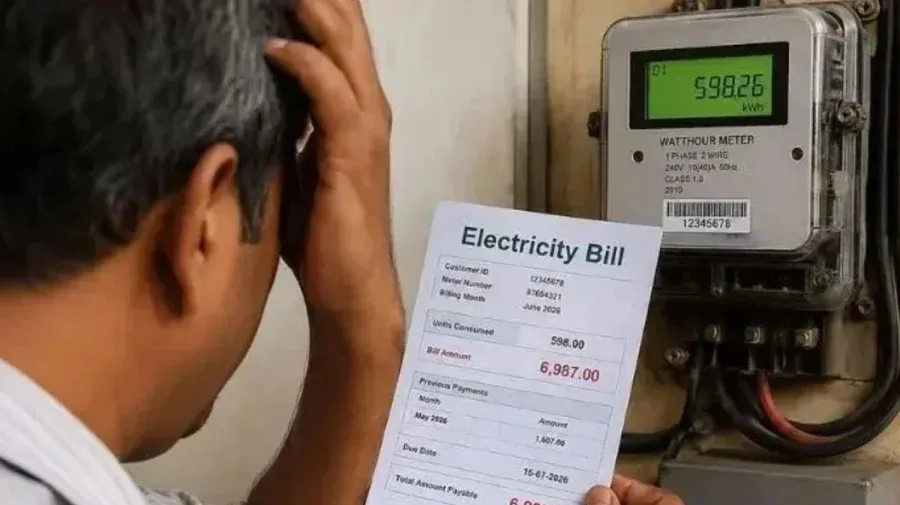
While access to electricity has significantly enhanced the standard of living for marginalized communities, soaring utility bills and erratic supply have emerged as primary challenges, according to a recent survey conducted by the Consumers Association of Bangladesh (CAB). The study, which evaluated 556 households across Rajshahi City Corporation and Shailkupa Municipality in Jhenaidah, found that while 89 percent of families acknowledged improved living standards through electrification, 69 percent expressed deep dissatisfaction over escalating electricity bills outpacing their household income. Furthermore, 55 percent of respondents categorized the reliability of power supply as poor or very poor.
The findings were presented on Wednesday (October 28) during a civic dialogue held at the Dhaka Reporters Unity (DRU). The survey—covering 334 families in Rajshahi and 222 in Shailkupa—detailed substantial shifts in consumption patterns among lifeline users over the past decade. Around 85 percent reported higher energy consumption, while 77 percent acquired more household appliances. Notably, refrigerator adoption surged from 10 to 40 percent and television ownership increased from 34 to 48 percent. Additionally, 76 percent of families noted an improved learning environment for children, and 97 percent reported an enhanced sense of safety at night.
The study also highlighted significant untapped potential for clean energy, identifying a combined capacity of 132.28 megawatt-peak (MWp) in rooftop solar generation across 31 public universities (52.50 MWp), 150 colleges (51.12 MWp), Rajshahi City Corporation (24.60 MWp), and Shailkupa Municipality (4.06 MWp). Presenters noted that harnessing these resources through public-private partnerships (PPP) would bolster generation capacity while generating local employment.
In its keynote presentation, CAB proposed a 12-point framework to identify impoverished households by analyzing domestic electricity consumption patterns, arguing that this method could streamline safety-net allocations and save substantial public funds—including an estimated Tk 2,699 crore under the Ministry of Social Welfare and Tk 216 crore under the Ministry of Finance. However, participating experts urged caution, noting that measuring poverty strictly through electricity data risks misclassification due to shared meters and lack of grid connectivity in remote char areas.
Addressing the session as chief guest, Political Advisor to the Prime Minister Ruhul Kabir Rizvi criticized previous indemnity provisions in the power sector, demanding transparent accountability, diversified energy alternatives, and foreign investment. General Secretary of the Bangladesh Poribesh Andolon (BAPA) Alamgir Kabir urged actionable policy incentives for renewables, while academics stressed investment security and technical skill development. Presided over by CAB General Secretary Humayun Kabir Bhuiyan, the dialogue concluded with CAB submitting three core recommendations to the government: re-evaluating lifeline tariff structures, enhancing supply reliability, and actively expanding rooftop solar infrastructure.