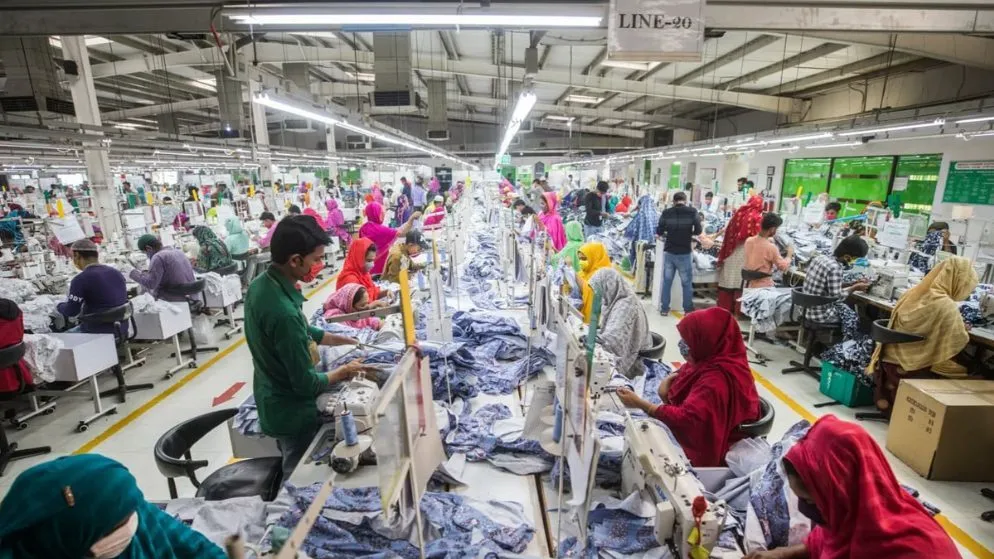
Bangladesh’s ready-made garment (RMG) industry is facing a major challenge. The United States is the single largest destination for Bangladeshi garment exports, while the European Union collectively accounts for the largest regional market, receiving around 50% of the country’s total garment exports.
Since the imposition of retaliatory tariffs, exports to the US have declined. India, one of Bangladesh’s main competitors in the garment sector, has signed a free trade agreement with the European Union. Currently, India pays a 12% tariff on garment exports to Europe, which will be reduced to zero once the agreement takes effect. Bangladesh is set to graduate from Least Developed Country (LDC) status in 2026, after which it will no longer enjoy duty-free access. Without a new agreement with the EU, Bangladeshi exports could face tariffs of around 12.5% from 2029 onwards, eroding the country’s long-standing competitive advantage in European markets.
Industry insiders say the sector is already grappling with multiple challenges. Gas shortages in industrial zones have reduced the production capacity of many factories to 30–40%. There is also a lack of advanced infrastructure, high-interest bank loans, and a shortage of skilled workers needed to operate modern machinery. Adding to these concerns is India’s EU free trade agreement, which will boost India’s exports, potentially capturing a portion of Bangladesh’s market. Additionally, under the EU–Vietnam free trade agreement, Vietnam’s tariffs will also drop to zero by 2027, further intensifying competition. To safeguard exports, the government must urgently negotiate GSP Plus benefits with the EU or sign a bilateral trade agreement.
Mohiyuddin Rubel, former director of the Bangladesh Garment Manufacturers and Exporters Association (BGMEA), said: “Europe is our largest market. Fifty per cent of Bangladesh’s garment exports go there. Once India’s free trade agreement is implemented, their existing tariffs will drop to zero, significantly increasing their capacity.”
He added: “India provides substantial support for cotton, giving them an edge. Their commerce minister has set targets of $30–40 billion, while Europe’s market is over $200–250 billion. This will inevitably take a share of the market that currently belongs to us.”