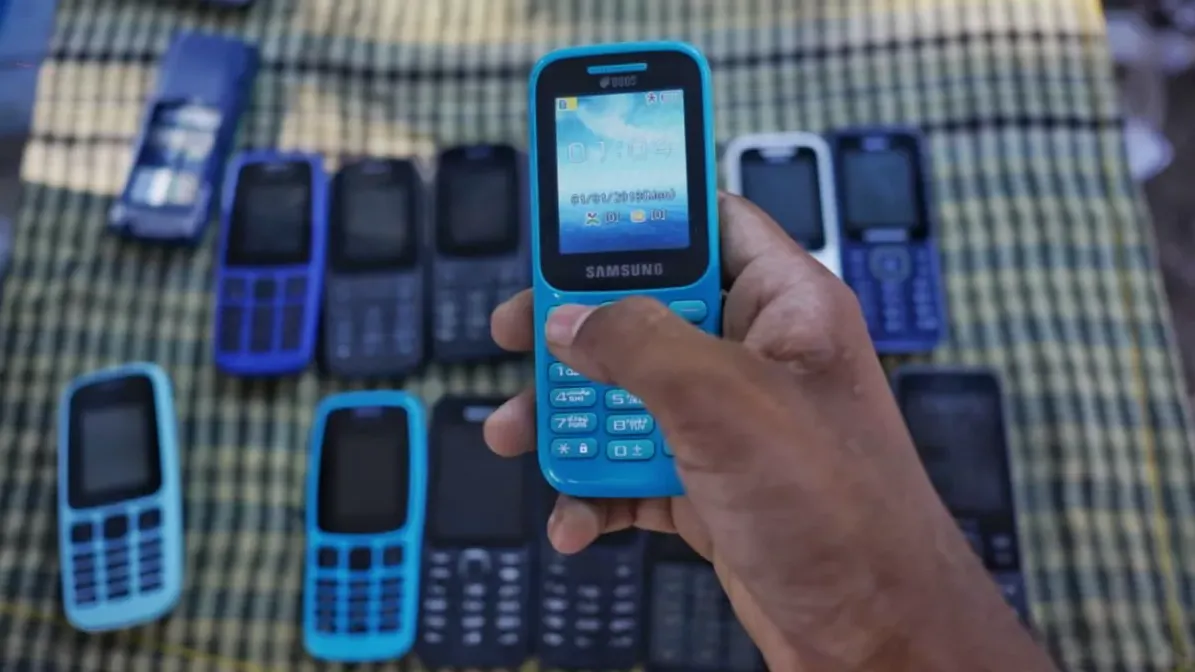
A button phone in one hand, a smartphone in the other — two devices representing two very different eras of mobile communication.
Bangladesh is now preparing for a major shift as the government plans to bring around 7 crore feature-phone users under mobile data services within the next six to 12 months.
But can millions of people who still rely on simple button phones make the leap to smartphones?
Prime Minister’s Adviser on Posts, Telecommunications and Information Technology Rehan Asif Asad has said initiatives will be taken to bring users of 2G and feature phones under mobile data networks.
For many users, the button phone remains more than an outdated piece of technology.
It provides the essentials — calling and SMS — without complicated menus, frequent charging or the distractions associated with smartphones.
Its long battery life and relatively low operating cost make it particularly attractive to elderly people, low-income workers and those who are less familiar with digital technology.
For some families, feature phones are also a deliberate choice.
Parents may prefer to give children basic phones rather than smartphones because of concerns over excessive internet use, social media, cyber risks and exposure to inappropriate online content.
Restrictions on smartphone use in some educational institutions and residential settings also keep demand for feature phones alive.
The government is seeking to remove one of the biggest barriers to smartphone adoption: price.
It is working to make affordable Android smartphones locally, with a target price of around Tk 5,000 to Tk 6,000.
According to officials, taxes and duties on raw materials for mobile phone production have been reduced to encourage local manufacturing. Manufacturers have said data-enabled Android handsets could be produced for around $50 to $60.
The government is also considering instalment or EMI facilities to make the devices more affordable.
But a cheaper handset alone may not be enough.
For a low-income user, the cost of owning a smartphone does not end with the purchase.
There is the recurring cost of mobile data, charging, repairs and, eventually, replacement of the device.
Then comes another barrier: digital literacy.
A person accustomed to making calls and sending SMS on a button phone may not immediately know how to navigate smartphone applications, protect personal information, recognise online scams or use digital services safely.
Network quality is another crucial factor. A smartphone is of limited value if reliable mobile internet is unavailable or unaffordable.
The button phone may be disappearing from the centre of Bangladesh’s digital story — but for millions of users, the question is whether the smartphone can offer something better without costing them more than they can afford.