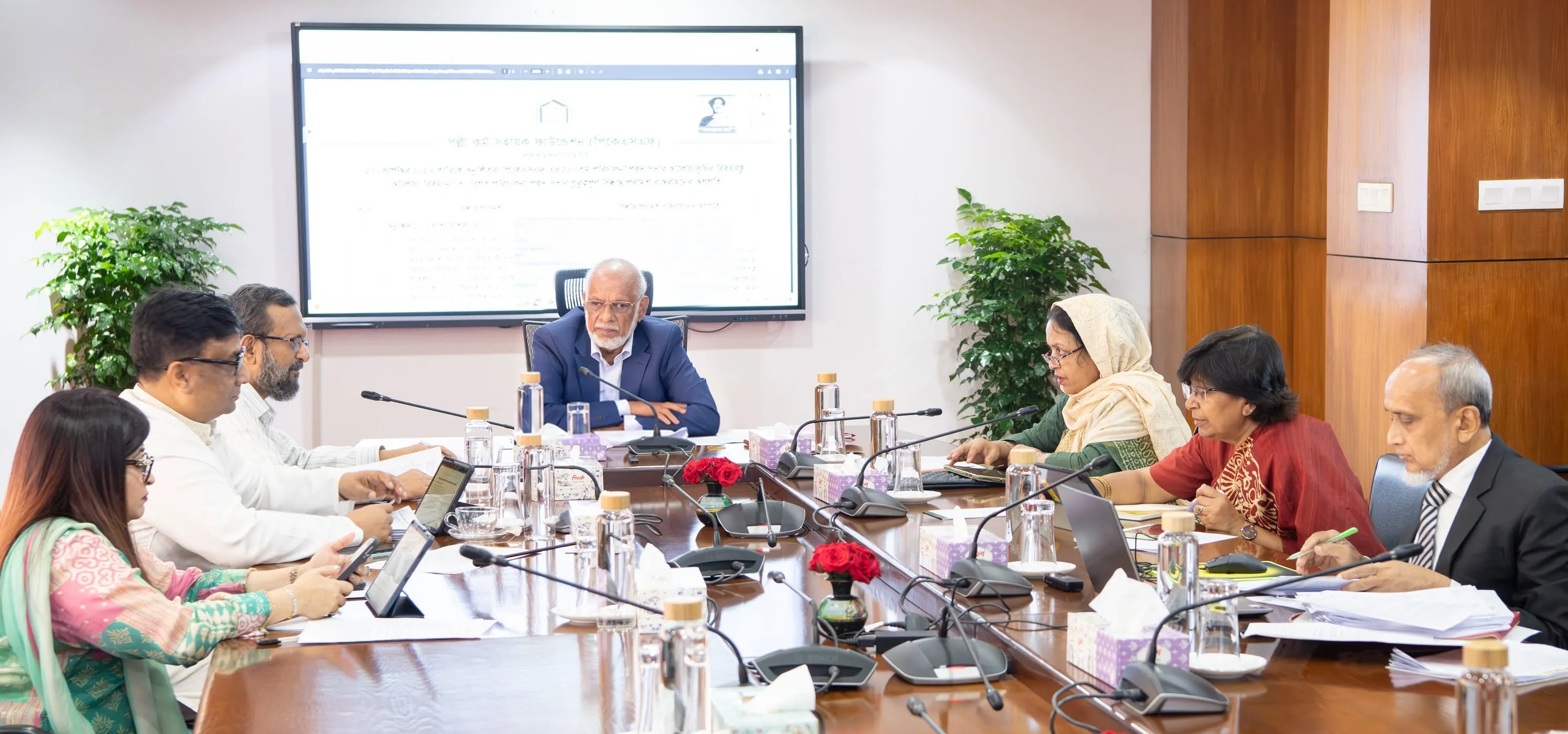
Palli Karma-Sahayak Foundation (PKSF) has earmarked Tk 7,245 crore in concessionary loan disbursements for the current fiscal year to scale up grassroots microenterprises, promote sustainable agriculture, and expand rooftop solar electrification across rural Bangladesh. The strategic decision was formally ratified during the foundation's governing advisory board meeting held at its Agargaon headquarters in Dhaka on Sunday (September 27) evening. This substantial funding allocation represents one of the largest financial commitments made by the apex development body in recent years. Foundation officials emphasized that the financial package is designed to foster climate resilience, generate self-employment for rural youth, and transition cottage industries away from fossil fuels.
Under the comprehensive credit deployment matrix, approximately Tk 5,800 crore will be channeled through PKSF's nationwide network of partner non-governmental organizations to support over 1.2 million rural microentrepreneurs. Priority will be accorded to female-headed households, agro-processing ventures, organic farming cooperatives, and traditional artisanal craft clusters. By lowering procedural collateral hurdles and offering single-digit interest financing, the initiative aims to protect marginal producers from predatory informal lending syndicates. The targeted funding will also assist smallholders in purchasing climate-resilient seeds, modernized dairy equipment, and automated looms to boost domestic value addition.
The remaining allocation of Tk 1,445 crore has been specifically ring-fenced for off-grid renewable energy projects, decentralized rooftop solar grids, and solar irrigation systems across remote riverine shoals and coastal belt districts. In recent years, fluctuating diesel costs and erratic grid electricity have constrained agricultural output in deltaic regions. By financing solar-powered irrigation pumps, PKSF seeks to lower production costs for small farmers during dry boro rice cycles while curtailing greenhouse gas emissions. The project will also subsidize community-level solar mini-grids in remote union parishads where national grid connectivity remains technically unviable.
To ensure fiscal transparency and project efficacy, PKSF has instituted an automated digital monitoring platform that tracks loan utilization and technical milestones in real time. Field officers will conduct bi-weekly compliance visits and provide hands-on vocational mentorship to beneficiaries, covering basic financial literacy, digital payment adoption, and environmental waste management. International development partners, including the World Bank and the Asian Development Bank, have contributed concessionary co-financing lines to support the program's technical capacity-building components. Independent evaluation teams will audit progress quarterly to maintain stringent fiduciary governance.
PKSF Chairman Dr Qazi Kholiquzzaman Ahmad stated on Sunday, "Our primary focus is building grassroots economic sovereignty by combining financial inclusion with decentralized clean energy technology." Addressing board members, he stressed that genuine poverty alleviation cannot occur without insulating rural communities from external climate shocks. He reaffirmed the foundation's unwavering commitment to empowering marginalized citizens, observing that empowering local microenterprises directly strengthens the domestic supply chain, curbs rural-to-urban economic migration, and establishes enduring economic self-reliance across Bangladesh's countryside.