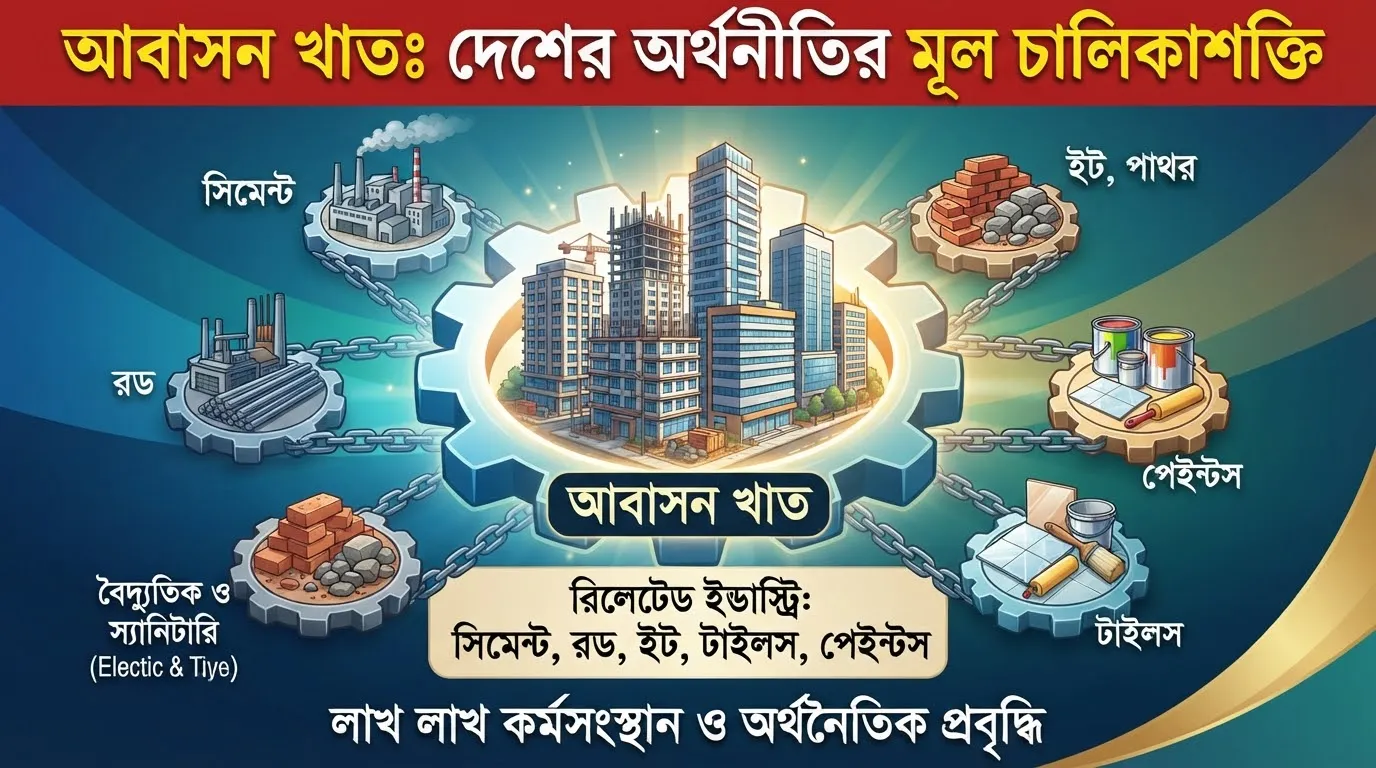
Stakeholders in the real estate sector have called on the government to take timely and business-friendly measures to protect the industry amid growing challenges, warning that a prolonged downturn could affect hundreds of related industries and put millions of jobs at risk.
Food, clothing and shelter are the three basic necessities of human life, with housing playing a crucial role in ensuring security and stability. While everyone aspires to own a home within their financial means, achieving that goal remains difficult for many. Real estate companies have helped make homeownership more accessible to a significant section of the population.
However, the housing sector is increasingly facing risks due to various factors, raising concerns about its future and its broader economic implications. Industry experts believe that protecting the sector is essential to maintaining economic momentum, as hundreds of supporting industries are closely linked to real estate and construction.
Under the slogan “Save the housing sector, save other industries,” experts and businesspeople have emphasised that real estate is not merely about constructing concrete structures or operating individual businesses. Rather, it serves as a key driver of the national economy, supporting a wide range of industries, employment opportunities and domestic market activities.
Discussions have recently intensified among different stakeholders over the sector's current condition, future challenges and far-reaching economic impact. Economists and industry representatives believe that the real estate sector plays a significant role in keeping the domestic market active and sustaining production across various industries.
More than 250 supporting and subsidiary industries are directly or indirectly linked to real estate, according to industry estimates. These include manufacturers and suppliers of construction materials such as steel rods, cement, bricks, stones, sand, ceramics and tiles. The sector also supports paint manufacturers, glass and aluminium businesses, electrical equipment producers and suppliers of sanitary fittings, pipes, wires, switches, sockets and lighting products.
Experts warn that any downturn in real estate, particularly a decline in flat and apartment sales, can quickly affect these linked industries. Reduced demand for construction materials may force factories to cut production, potentially slowing growth across the broader industrial sector.
The real estate and construction industries are also major sources of employment in Bangladesh. Engineers, architects, project managers, construction supervisors, masons, rod workers, electricians and thousands of other labourers depend directly or indirectly on activities in the sector for their livelihoods.
A prolonged slowdown could therefore threaten the employment of millions of people and create wider economic and social challenges. The impact could extend beyond construction sites to manufacturing, transportation, retail and other businesses connected to the housing market.
To overcome the current difficulties and ensure sustainable growth, businesspeople and experts have proposed several measures, including long-term, investment-friendly policies that would allow developers and investors to operate in a more predictable business environment.
They have also called for easier access to housing loans and financing at lower interest rates for both prospective homebuyers and developers. According to stakeholders, affordable financing could help stimulate demand for apartments while enabling developers to continue construction and investment activities.
Strengthening public-private partnerships has also been identified as an important step towards expanding housing opportunities and supporting the sector's development. Greater cooperation between the government and private businesses could help mobilise investment and facilitate housing projects.
Stakeholders have further stressed the need for effective market monitoring to curb the rising prices of essential construction materials, particularly steel rods and cement. They believe that controlling construction costs would help developers manage expenses and make housing more affordable for buyers.
Industry representatives have expressed hope that the government and policymakers will recognise the sector's importance and introduce appropriate measures to address its challenges. They argue that a vibrant real estate industry does more than provide flats and buildings; it also strengthens the country's economic foundations, sustains employment and stimulates growth across numerous interconnected industries.
They maintain that protecting the housing sector is essential not only for the real estate business but also for the wider economy, making timely government intervention increasingly important.