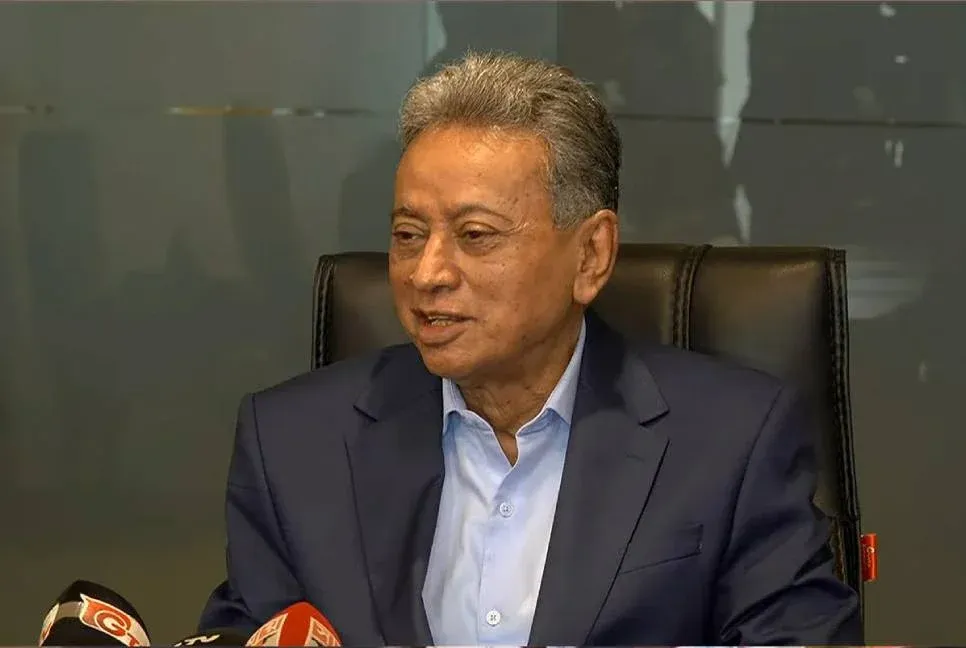
Finance Minister Amir Khosru Mahmud Chowdhury stated that fully executing the BNP-announced 31-point structural reform agenda is essential to materializing the core aspirations of the July mass uprising, the 1971 Liberation War, and the prolonged anti-autocracy democratic struggles.
Speaking as the chief guest at the 'July Mass Uprising Remembrance Programme 2026' hosted by the Bangladesh University of Engineering and Technology (BUET) in the capital today, he emphasized the government's unwavering commitment to the proposed state reforms. "We have outlined a comprehensive manifesto, and it is imperative that we implement it in its entirety. If we can successfully execute the 31-point programme, the ultimate goals of the July revolution, our independence movement, and the relentless fight against authoritarianism will achieve their true fulfillment," the minister asserted.
Reflecting on his personal ordeal during the recent July uprising, the finance minister shared harrowing memories of incarceration alongside thousands of political leaders and grassroots activists. He recounted how detainees were systematically deprived of accurate information regarding the escalating mass movement unfolding on the streets.
He vividly recalled the electric atmosphere inside the prison walls when the news finally broke that ousted Prime Minister Sheikh Hasina had fled the country. The revelation sparked an intense reaction among the inmates. At the urgent request of the jail superintendent to maintain order, Amir Khosru stepped in, delivering a pacifying appeal that successfully restored calm and prevented potential unrest within the facility.
Looking ahead, the finance minister acknowledged the sky-high expectations of the populace, born out of years of grueling struggles and profound sacrifices. "For over a decade and a half, the people have endured the systematic deprivation of their fundamental voting rights, human rights, the rule of law, and economic parity," he noted, explaining how national commerce and trade were monopolized by an oligarchic syndicate, leaving ordinary citizens disenfranchised from meaningful economic participation.
To rectify these deep-seated inequalities, the BNP crafted its reform manifesto by actively listening to the public's demands, aiming to restore civic rights and lay the foundations for a "new Bangladesh." Amir Khosru elaborated on two foundational pillars of this political vision: the "Bangladesh First" doctrine and the vital concept of "economic democratization." The former, he explained, dictates that the nation’s sovereignty, independence, and the supreme welfare of its citizens must dictate all state policies.
Expanding on the democratization of the economy, he argued that political liberty remains incomplete without financial equity. "Political democracy alone is insufficient; we must institutionalize democracy within our economic frameworks to ensure every citizen can actively participate in and reap the dividends of national growth," he remarked.
To this end, the administration is heavily prioritizing the "creative economy." This initiative aims to integrate rural artisans, traditional craftsmen, cultural workers, and local athletes into the mainstream macroeconomic fold. The minister highlighted the pressing need to facilitate targeted skills development, ensure equitable access to micro-credit, provide modern design support, and open robust market channels for these marginalized sectors. "If we can systematically incorporate the sports economy, grassroots entrepreneurship, and heritage industries—such as Shital Pati weaving and rural pottery—into the formal market, we will witness a transformative uplift in the income and living standards of the working class," he projected.
Assessing the inherited macroeconomic landscape, the finance minister did not mince words about the daunting challenges facing the current government. He described an economy left in shambles by the previous administration, characterized by severe liquidity crises in the banking sector, a battered stock market, and thoroughly compromised public financial management.
"We did not merely start from zero; we were forced to begin our journey from a massive negative deficit," he stated.
Despite these severe fiscal constraints, the government has swiftly rolled out crucial social safety net initiatives, including the Family Card, the Farmer Card, and expanded primary healthcare schemes. The Family Card, in particular, is designed to channel direct state assistance to marginalized households, fostering tangible improvements in their health, nutrition, and educational outcomes.
Concluding his address, Amir Khosru declared that honoring the spirit of the July martyrs necessitates constructing a cradle-to-grave social support infrastructure for all citizens. "We must deploy pragmatic and effective interventions to elevate the socio-economic standing of women, children, the labor force, and persons with disabilities. The ultimate triumph of the July movement hinges entirely upon our ability to fulfill these solemn promises to the people," he affirmed.
The memorial event was presided over by BUET Vice-Chancellor Professor Dr. Ekramul Haque. The program was also attended by State Minister for Youth and Sports Md. Aminul Haque and Dhaka-7 lawmaker Hamidur Rahman Hamid, who graced the occasion as special guests.