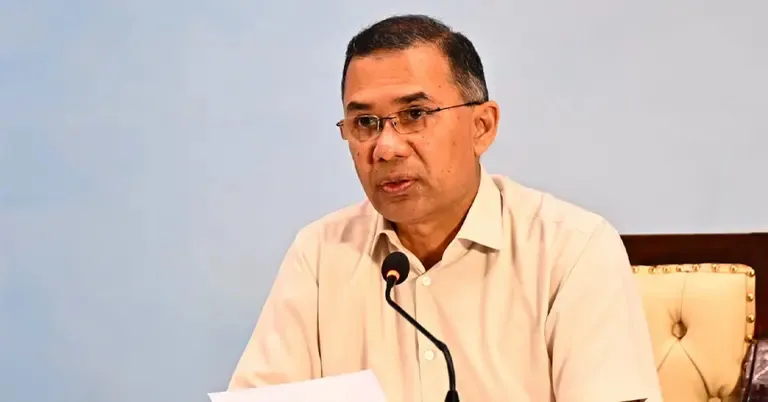
Prime Minister Tarique Rahman has asserted that transforming Bangladesh into a trillion-dollar economy by 2034 is not a political slogan, but a concrete strategic blueprint. He emphasized that the government is determined to double the size of the national economy within the current decade by leveraging aggressive export diversification, robust foreign direct investment, and strict financial discipline.
The Prime Minister articulated this long-term vision on Thursday during the formal signing ceremony for an Islamic Development Bank (IsDB) financing agreement aimed at upgrading and expanding the state-owned Eastern Refinery Limited (ERL). Prime Minister’s Deputy Press Secretary Mostafa Zulfiqar Hasan confirmed the development to reporters.
Under the framework of the agreement, the multilateral lender will provide approximately $1.004 billion in project financing to overhaul and expand Eastern Refinery Limited.
Reiterating his administration's forward trajectory, the Prime Minister stated that a new government has assumed office in Bangladesh with a distinct national direction. He maintained that while the readymade garments sector served as the cornerstone of the country’s initial phase of industrial growth, the subsequent wave of expansion must be spearheaded by high-value electronics, pharmaceuticals, light engineering, and green manufacturing. He emphasized the government's aim to foster industries that generate sustainable employment and uphold human dignity.
Highlighting the administration’s social welfare roadmap, the Prime Minister noted that targeted welfare instruments like the "Family Card" and "Farmer Card" have already been rolled out, while procedural work to launch a dedicated "Health Card" is progressing steadily.
Turning to the multifaceted headwinds facing developing nations, he cautioned that escalating geopolitical conflicts, global supply chain disruptions, food and energy insecurities, climate shocks, rapid technological displacement, and the surging cost of development finance are piling exceptional pressure on rising economies. Emphasizing that no nation can weather these global strains in isolation, he stated that cross-border partnerships have become more vital than ever before.
In this context, the Prime Minister called for cultivating a dynamic, modernized partnership between Bangladesh and the IsDB—one that is innovative, responsive, and outcome-oriented, aligning directly with the country’s evolving structural priorities. He commended the bank as a dependable development financier and congratulated IsDB Group Chairman Dr. Muhammad Al Jasser on his re-election, praising his leadership in establishing the Islamic Concessional Fund (ICF) to ease low-cost financing for member nations.
He added that teams from the Economic Relations Division (ERD) are actively collaborating with the IsDB regional hub in Dhaka to identify bankable infrastructure ventures. Furthermore, he urged the IsDB to act as an integrative bridge connecting the distinct strategic advantages of member states, pairing energy-rich nations with infrastructure-strong peers to drive joint economic growth.
The formal financing pact—valued precisely at $1,004.29 million—was inked at the Bangladesh Secretariat in the presence of Prime Minister Tarique Rahman and IsDB Group Chairman Dr. Muhammad Al Jasser. Additional Secretary of the ERD Dr. Md. Mizanur Rahman signed on behalf of the Government of Bangladesh, while Director General (Country Programmes) Anassi Aissami signed for the IsDB Group.
The ambitious modernization drive will be executed by the Bangladesh Petroleum Corporation (BPC) under the Energy and Mineral Resources Division. Once completed, the project will expand the facility's crude processing capacity from 1.5 million metric tons to 4.5 million metric tons annually. Beyond reinforcing domestic energy security, the upgraded plant will produce environment-friendly Euro-5 standard fuels and substantially curb national dependence on expensive imported refined petroleum.