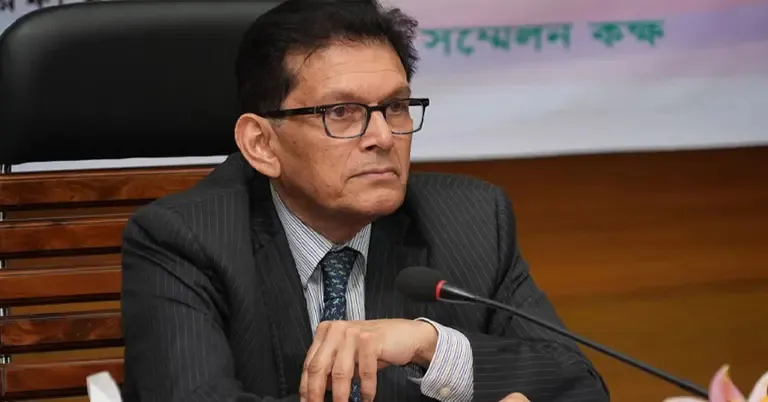
President of the 81st Session of the United Nations General Assembly and Foreign Minister Dr. Khalilur Rahman has termed the plight of the Rohingyas sheltered in Bangladesh a "grave humanitarian catastrophe."
In an interview with UN News, Dr. Rahman reflected on his firsthand experience with the refugee situation, emphasizing that violence offers no pathway to resolution and that an enduring, sustainable solution can only be achieved through dialogue, consensus, and unified multilateral engagement.
Assuming leadership of the 81st UNGA session, Dr. Rahman identified restoring global faith and confidence in the United Nations system as his core objective for the one-year tenure. Drawing directly from lessons learned navigating the Rohingya crisis, he urged world leaders convening for the High-Level Week to provide actionable guidance on revitalizing the institution's credibility.
Reflecting on the founding principles of 1945, he observed that while the UN has successfully prevented large-scale global conflict over eight decades, notable shortcomings remain in conflict prevention and development delivery. He stressed the imperative to advance the organization's three cardinal pillars—peace and security, development, and human rights—in equal measure.
Addressing modern geopolitical shifts, Dr. Rahman highlighted Artificial Intelligence (AI) as a transformative frontier. While acknowledging its power to augment human capabilities, he cautioned against potential existential risks, calling for robust safety guardrails and multi-stakeholder governance to ensure technological innovation aligns with human welfare.
Emphasizing the General Assembly’s unique moral authority, he described it as an indispensable global platform facilitating public and backchannel diplomacy while establishing international norms. Witnessing the resilience of displaced Rohingyas and their longing for repatriation, Dr. Rahman noted that this endurance reinforces his commitment to diplomatic resolution over force. By the end of his presidential term, he aims to secure member-state consensus on structural UN reforms, ensure financial stability, and accelerate ground-level delivery of humanitarian services.