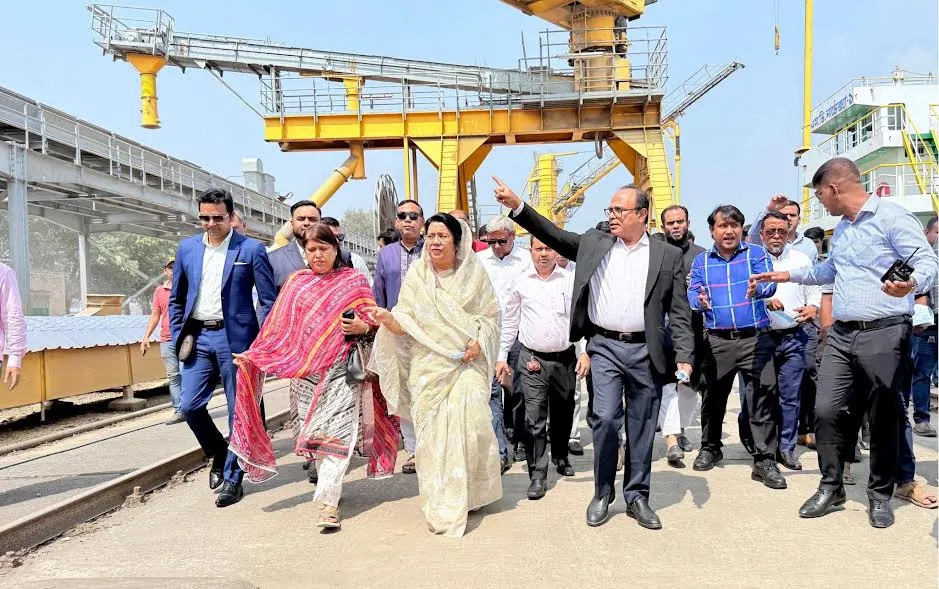
Food Minister Afroza Khanam, MP, said she is optimistic there will be no supply shortage during Ramadan, as food stocks are adequate.
She stressed, however, that advance preparations are needed to account for higher demand, transportation costs, and volatility in the international market.
Afroza Khanam made the remarks on Saturday (October 10) while briefing journalists after inspecting the Chattogram jetty and silo. She later visited the CSD warehouse in Dewanhat and inaugurated the conference room at the Halishahar CSD.
The Minister said effective measures are needed to assess likely demand for food products, review the progress of imports and domestic procurement, and quickly resolve supply-chain obstacles.
“Price pressures could arise from several factors, including the fuel oil crisis in the international market. The government is working to keep the market supply normal while taking the public's purchasing power and interests into account,” he added.
Afroza Khanam stressed the need to resolve existing complexities in import operations and to ensure food arrives in the country on time, which requires better coordination among the relevant departments. She also called for realistic steps to address manpower shortages and administrative limitations within the Food Department.
Noting that the country's stocks are adequate relative to demand, the Minister said food security also depends on proper storage, efficient management, and timely distribution.
Officials must work in a coordinated way to keep supplies normal, prevent wastage, and make the best use of government resources during the coming Ramadan, she added.
The food Minister added that plans must be realistic, based on the demands of different regions, warehouse-level stock, and supply capacity.
Coordination at every stage, from procurement and storage to distribution, would help cut delays, transportation costs, and food wastage, he added.
Khanam said she conducted an on-site review of the existing infrastructure's functionality, the progress of project implementation, and the limitations of the storage system. Necessary action will be taken with the relevant departments and ministries to resolve the issues identified, she added.
She said warehouses must be regularly maintained, stored food must be quality-checked, and essential equipment must be kept operational.
The Minister expressed hope that coordinated efforts would increase food storage capacity, reduce waste, and overcome existing supply-chain limitations.
Director General of Food, officials of the Food Department, and senior officials of the district administration were present during the inspection.