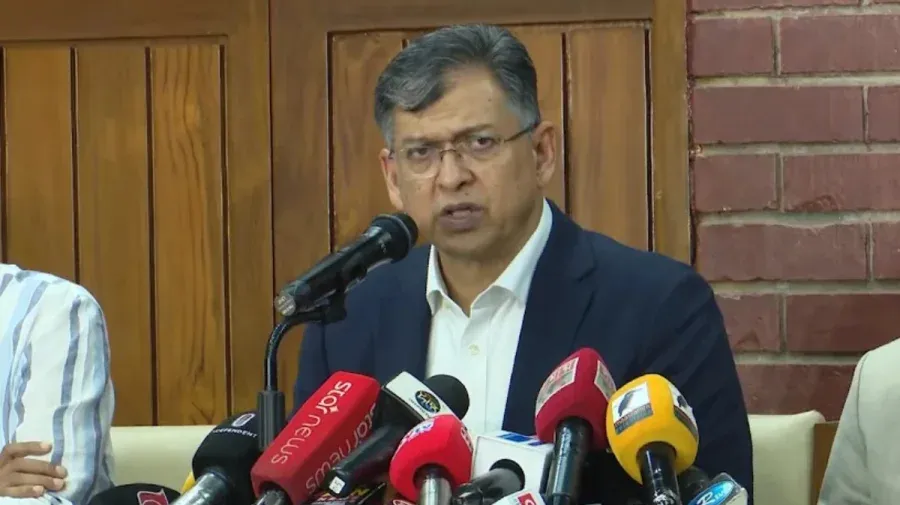
Several alternative structural models for forming an election-time caretaker administration have been deliberated by the Special Committee on Constitutional Reform, including proposals to retain a proposed Upper House, introduce a Vice President post, and form the interim government through that structure. Special Committee Chairman and Home Minister Salahuddin Ahmed emphasized, however, that no definitive conclusions have yet been reached on any of the proposals.
Speaking to reporters following a consultation with constitutional experts, jurists, and legal academics at the National Parliament Building on Saturday (October 24), the Home Minister noted that discussions covered the composition, structural size, jurisdiction, and procedural framework of the caretaker administration. Elaborating on the ideas raised, Ahmed explained that if an Upper House is instituted without dissolving alongside the Lower House, the caretaker apparatus could theoretically be formed from within that ongoing chamber.
Under this concept, a Vice President could be instituted within the Upper House to serve as Speaker and potentially lead the caretaker administration. Alternatively, participants proposed that a Speaker elected through bipartisan consensus between the treasury and opposition benches could head the interim administration, with other advisers selected from the Upper House through mutual agreement. The Home Minister stressed that these concepts remain open for evaluation and urged stakeholders to submit specific written recommendations, which will be synthesized into the committee's forthcoming report before potential legislative drafting.
Ahmed also noted that participants held theoretical discussions on excluding the judiciary from the process and eliminating the contentious default fallback option of the President assuming the chief adviser's mantle, aiming instead for broad consensus. Reflecting on the controversial abolishment of the system in 2011, he claimed that internal committee consensus had originally favoured retaining it before unilateral executive directives intervened. Reaffirming the committee's invitation to opposition lawmakers, Ahmed urged opposition parties to attend committee proceedings and place their notes of dissent or recommended modifications directly for formal consideration.