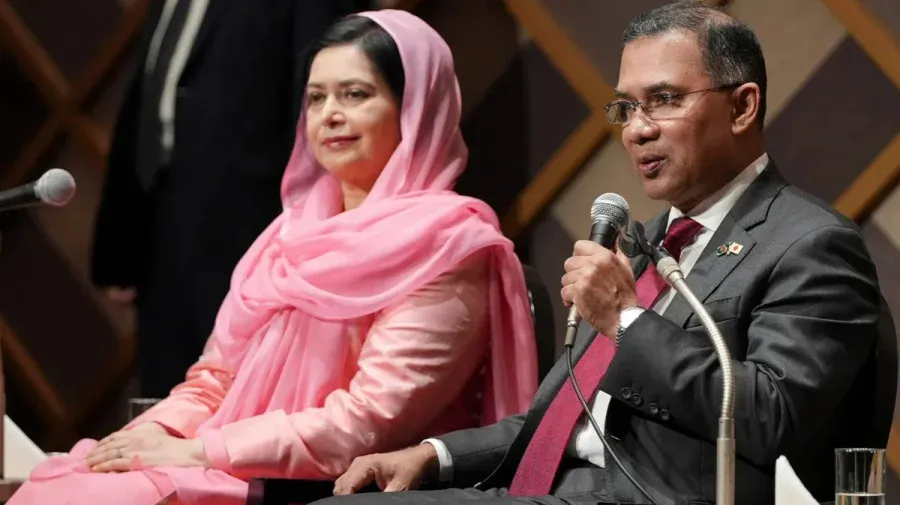
The government has launched comprehensive initiatives to transform Dhaka and the rest of Bangladesh into clean, pollution-free, and healthy living environments, with a vision to develop the capital city on par with Tokyo's cleanliness standards, said Prime Minister Tarique Rahman. He made the remarks on Wednesday evening (October 28) during an interactive session with expatriate Bangladeshis at Hotel New Otani in Tokyo, Japan, organized by the local Bangladeshi community.
Responding to queries from community members, the Prime Minister observed that unlike the litter-free streets of Tokyo, accumulated refuse remains a persistent sight across Dhaka, exposing urban residents to airborne pathogens and significant health risks. He stressed that effective waste management, active tree-planting campaigns, and stringent measures to curb air pollution are essential to safeguard civic health and elevate living conditions, noting that successfully transforming Dhaka to Tokyo's standards would mark a major urban reform.
Prime Minister Tarique Rahman emphasized that his administration's overriding priority is ensuring that institutional reforms directly uplift marginalized and working-class citizens through targeted interventions in healthcare, education, and municipal infrastructure. Addressing attempts by vested groups to obstruct reform programs designed for the public good, the Prime Minister urged expatriates to support actionable governance based on performance rather than partisan affiliation. He also outlined plans to promote Japanese language training for youth, improve business processes, revive idle industrial facilities, stimulate inward investment, and generate employment.