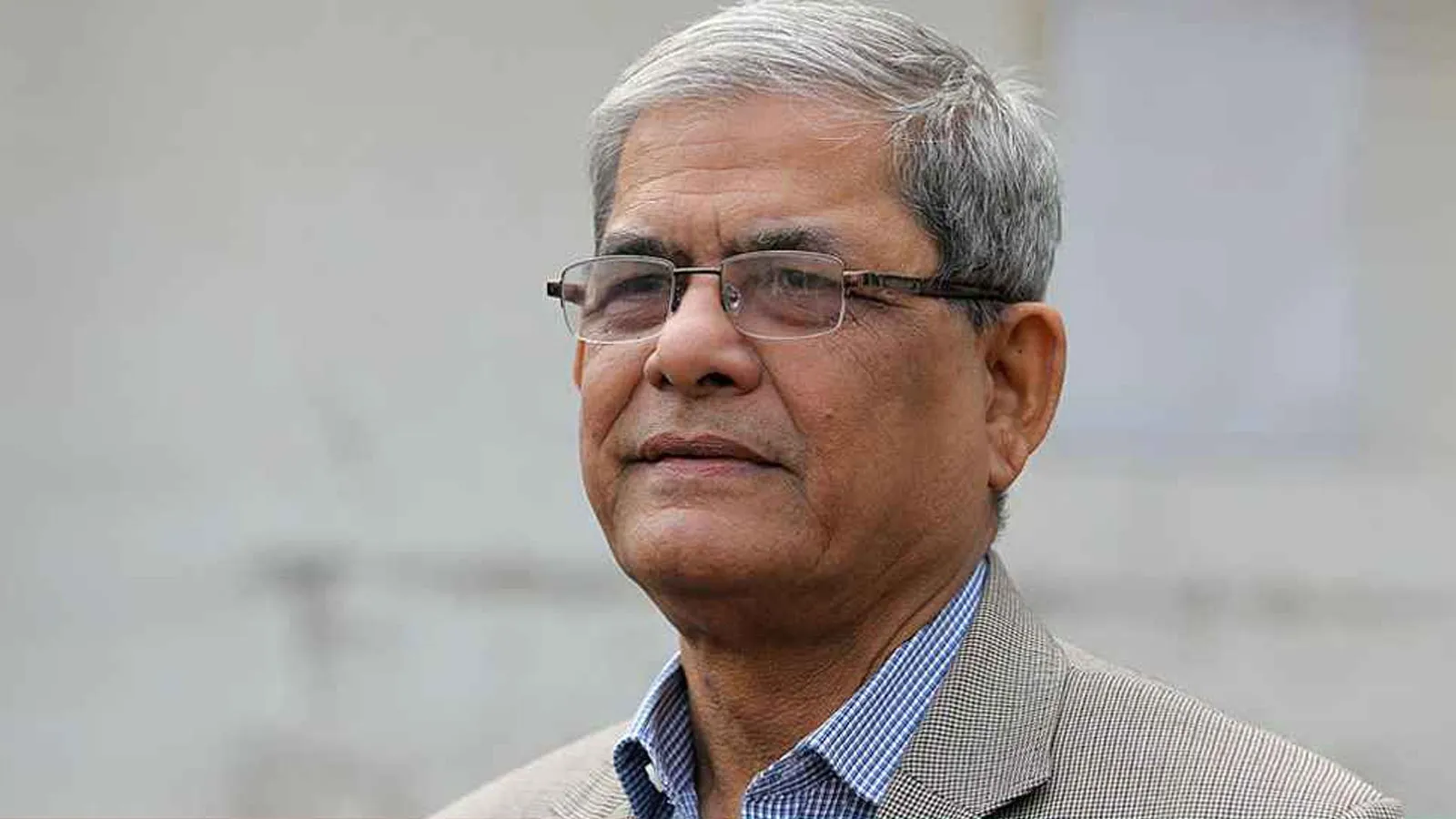
Discussions are intensifying in Bangladesh’s political arena as BNP Secretary General Mirza Fakhrul Islam Alamgir is widely seen as the likely candidate for the upcoming presidential election.
Multiple senior party sources indicate that his nomination has been almost finalized, although no official announcement has been made yet.
Under the presidential election law, a candidate must submit a signed declaration of consent along with the nomination papers. According to party insiders, Fakhrul has already signed the required document.
As per the Election Commission’s schedule, nomination papers will be submitted on August 13, while voting is set to take place on August 20. The ruling BNP has already begun preparations and collected nomination forms from the commission.
The development has also triggered speculation over who will succeed Fakhrul as BNP’s Secretary General—a position he has held for nearly 16 years. Names such as Salahuddin Ahmed and Ruhul Kabir Rizvi are being discussed as potential successors. Party insiders suggest that an acting secretary general may be appointed before a final decision is taken at the next council.
Meanwhile, the opposition alliance led by Jamaat-e-Islami has announced Colonel (Retd.) Oli Ahmad, chairman of the Liberal Democratic Party, as its candidate. Analysts believe the move is aimed more at political signaling than electoral victory.
The president is elected by members of parliament, and with BNP holding a strong majority, its nominee is expected to win. However, the presence of an opposition candidate means a formal vote is likely this time.
Overall, the election is shaping up to be more than a routine process, reflecting internal party dynamics, opposition positioning, and broader political strategy.