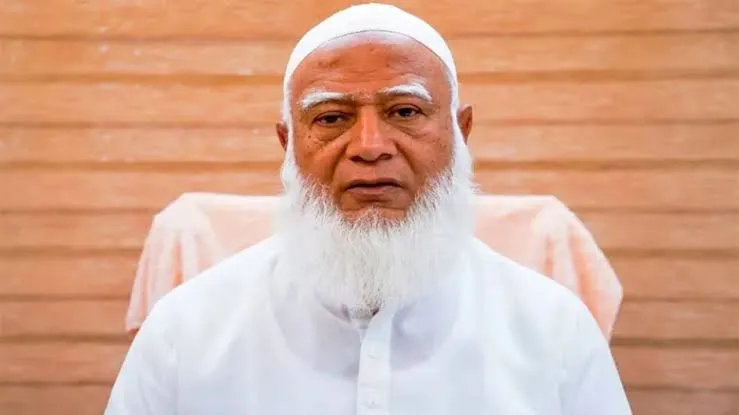
Ameer of Bangladesh Jamaat-e-Islami and Leader of the Opposition in Parliament, Dr. Shafiqur Rahman, has dismissed rumors regarding the National Citizen Party's (NCP) potential exit from the Jamaat-led 11-party electoral alliance as baseless, asserting that no such issue exists on the political agenda of either group.
Furthermore, accusing the ruling administration of systemic discrimination against opposition parliamentary constituencies in development allocations, the opposition leader announced ongoing preparations to form a high-caliber "Shadow Cabinet."
Dr. Shafiqur Rahman made these remarks while responding to reporters on Tuesday evening (August 25) after visiting the central headquarters of the National Citizen Party in the capital's Banglamotor area. Senior leaders from Jamaat-e-Islami, the NCP, and their allied affiliate organizations were present during the briefing.
Dismissing reports of an impending rift within the political alliance using a traditional Bengali proverb, Dr. Shafiqur Rahman remarked:
"This is neither on the NCP's agenda nor on ours. It is essentially a scenario where the host having the wedding feels no anxiety, yet the neighbors are losing their sleep. Our understanding was never a rigid, permanent front; rather, it was an effective electoral consensus, and currently, we are operating simultaneous, issue-based street movements to realize the fundamental rights of the people."
Reflecting on coalition dynamics, Dr. Rahman noted that multi-party politics has historically seen coalitions evolve—expanding from four parties to 18, 20, and eventually 27. He emphasized that in a healthy multi-party democracy, any political entity holds the freedom to determine its trajectory without coercion, yet the collective objective of the current alliance remains strengthening cooperation in the greater national interest.
Detailing the initiative to establish a Shadow Cabinet to monitor governance and hold administrative ministries accountable, the Jamaat chief revealed that comprehensive preliminary preparations are underway:
"We are working on the structure of a robust Shadow Cabinet. Beyond capable individuals from within our alliance partners, we plan to mobilize the 'intellectual remittance' of seasoned technocrats, accomplished professionals, and domain experts residing both domestically and abroad to ensure effective oversight."
Dr. Shafiqur Rahman strongly criticized the government for exhibiting partisan bias in state budgetary allocations, pointing out that opposition constituencies are being systematically deprived in contrast to ruling-party seats:
"Responsible leaders of the ruling party are publicly claiming that if people vote for the opposition, they cannot demand development from the government. Development is an inalienable constitutional right of every citizen, not partisan charity. Furthermore, the decision to assign extraordinary executive oversight to reserved-seat female lawmakers specifically within opposition-held seats directly undermines constitutional norms and parliamentary traditions."
The Leader of the Opposition also accused the administration of ignoring the public mandate for institutional reforms, stating that while nearly 70 percent of voters endorsed reform initiatives during the national referendum, the ruling party reneged on its pledges after securing a massive electoral majority, leaving the opposition with no recourse but to mobilize public street movements.
Speaking at the briefing, NCP Convener and Opposition Chief Whip Nahid Islam declared that the parliamentary and street-level solidarity between the alliance partners will remain steadfast until authoritarian structures are dismantled and a new political settlement is established. Highlighting public distress caused by nationwide shortages of natural gas, electricity, and agricultural fertilizers, he called upon all democratic, reformist, and nationalist forces to unite against emerging authoritarian tendencies.
The visit was attended by Jamaat Central Working Committee Member Zahidur Rahman, along with central and metropolitan leaders representing the NCP, Jatiya Chhatrashakti, Juba Shakti, and Nari Shakti.