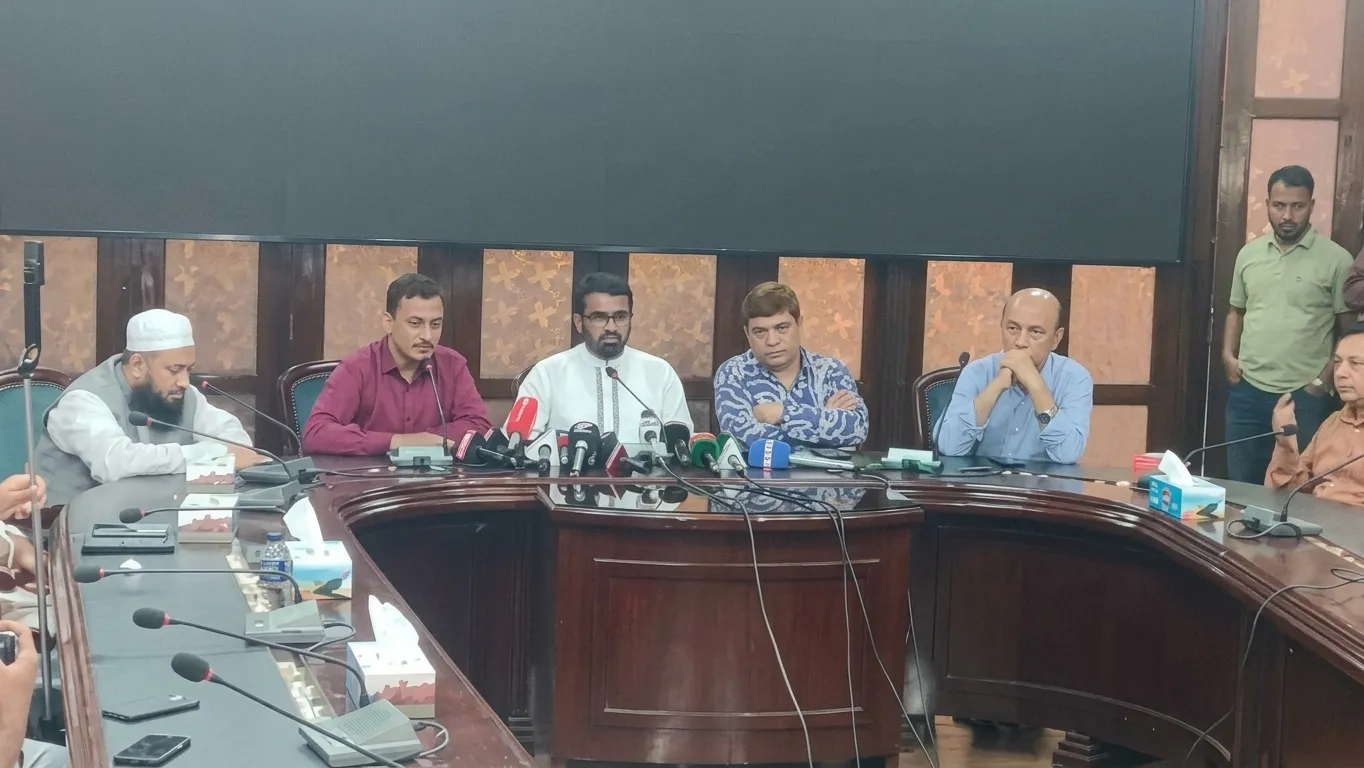
Addressing escalating political rhetoric and friction surrounding the post-uprising governance trajectory of Bangladesh, Prime Minister's Political Assistant Rashed Khan urged Bangladesh Jamaat-e-Islami on Friday (October 2) to dedicate more time to organizational preparation before aspiring to govern the republic. Speaking to reporters during a high-level administrative briefing at the Chattogram Circuit House, Khan emphasized that the country is currently traversing a delicate, historic period of comprehensive state rebuilding following the triumphant July mass uprising. The senior political aide stressed that ordinary citizens, having sacrificed immeasurably to overthrow autocratic tyranny, expect political parties across the spectrum to work in collaborative harmony rather than igniting premature partisan power struggles. Khan explicitly cautioned all political formations against launching disruptive anti-government street agitations, particularly as the nation navigates acute macroeconomic challenges and persistent energy supply bottlenecks.
The pointed political remarks follow recent public statements by senior Jamaat-e-Islami leadership demanding expedited national electoral timelines and criticizing specific administrative policies enacted by the interim governance apparatus. Addressing these criticisms directly, Rashed Khan remarked that governing a complex nation of one hundred and seventy million people requires immense administrative acumen, institutional experience, and broad-based democratic acceptability that cannot be achieved overnight through populist political rhetoric. He pointed out that while every registered political party possesses the constitutional prerogative to participate in future general elections, rushing to seize state power without addressing deep-rooted socio-political polarization risks destabilizing the fragile democratic transition. Khan highlighted that the government's primary mandate remains the thorough structural reform of the judiciary, election commission, law enforcement agencies, and economic regulatory bodies to ensure that future elections are genuinely free, fair, and irreversible.
Expanding upon the economic imperatives confronting the administration, the Prime Minister's Political Assistant underscored that street disruption at this critical juncture would inflict catastrophic damage upon the country's fragile macroeconomic recovery. Khan explained that ongoing global energy market disruptions, compounded by domestic natural gas constraints and escalating international petroleum prices, demand absolute domestic solidarity and uninterrupted industrial manufacturing across key export sectors. He asserted that the general public is acutely weary of traditional street strikes, transport blockades, and political showdowns that historically disrupted daily livelihoods and devastated small businesses. The aide affirmed that constructive opposition critique is deeply welcomed by the administration, but warned that attempts to exploit public grievances over inflation to manufacture artificial political crises would be viewed by citizens as a betrayal of the July revolution's collective spirit.
The remarks have ignited spirited debate across national political corridors and civil society circles regarding the delicate balance between transitional consensus and competitive multiparty democracy. Political analysts and university scholars observed that while broad national unity was essential to topple the past regime, emerging ideological fractures between center-right, Islamist, and secular student coalitions are becoming increasingly visible as the country inches closer to eventual electoral contests. Representatives of Jamaat-e-Islami responded by asserting their democratic right to advocate for institutional transparency and the timely restoration of an elected parliament, maintaining that their political engagements are designed to hold the administration accountable rather than destabilize the state. Meanwhile, civil society leaders in Chattogram and Dhaka echoed Khan's appeal for patience, emphasizing that political instability would frighten away foreign investors and jeopardize crucial IMF and World Bank stabilization financing packages.
Reaffirming the interim administration's dedication to an inclusive, participatory democratic future, the Prime Minister's Office reiterated that regular consultative dialogues will continue with all major political parties to build consensus on essential reform charters. Rashed Khan concluded his media interaction by stating, "The July uprising was not fought to replace one autocratic monopoly with another partisan hegemony; our collective duty is to build an enduring democratic foundation where the people's will reigns supreme, and that requires maturity, patience, and mutual respect among all political forces." The administration confirmed that divisional roundtables with youth organizers, business leaders, and political representatives will be convened across all eight divisions over the coming weeks to harmonize national priorities. The measured political counsel underscores the immense complexity of steering Bangladesh through a transformative transition where historical animosities must yield to the monumental imperative of state reconstruction.