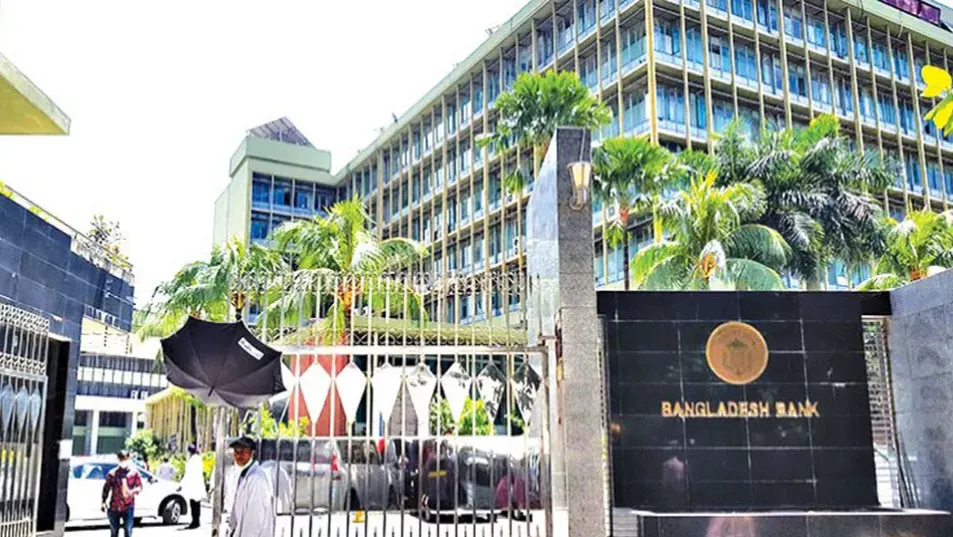
A last-minute amendment to the ‘Bank Resolution Bill’ has exploded a firestorm of controversy within Bangladesh's banking sector and among economists.
Critics and analysts warn that the new provision could pave the way for disgraced former owners—those responsible for plunging banks into crisis—to reclaim control of their institutions for a nominal down payment.
Economists and banking sector insiders have warned that at the domestic and international level, it would be a bad signal in banks and financial sector reforms activities, which is expected by the IMF and World Bank.
‘Bank Resolution Act’ facilitates corruption and moves to rehabilitate bank looters: TIB
The center of the storm is Section 18(A), a clause reportedly added on the night of April 9, just before the bill was tabled in Parliament. Financial experts describe this move as creating a "staircase for return" for individuals and groups involved in large-scale loan irregularities and mismanagement, said officials of Bangladesh Bank.
The controversy is centred around the newly added Section 18(A). Under this newly incorporated section, former shareholders of weak banks that have undergone merger or resolution can apply to reclaim their shares, assets, and liabilities. Former owners can initiate the transfer of control by depositing only 7.5 percent of the total funds previously injected by the government or Bangladesh Bank to save the institution.
The remaining 92.5 percent of the state-provided funds can be repaid over two years at a 10 percent simple interest rate.
"If the government spends Tk 20,000 crore to bail out a bank, the former owners can effectively take it back by paying just Tk 1,500 crore initially," noted a banking analyst.
"For those who have siphoned off thousands of crores, this is a negligible amount. It’s like returning a bank for a nominal down payment," said a former governor of Bangladesh Bank, preferring anonymity.
Sources within the Bangladesh Bank revealed that the central bank was largely bypassed regarding this specific amendment. A committee formed on April 1 had initially proposed a streamlined version of the law, reducing it from 98 to 74 sections, but Section 18(A) was not part of the final draft submitted by the technical committee.
"We requested the Finance Ministry to exclude this controversial clause the moment we learned of it," a senior central bank official said on condition of anonymity. "Allowing those who destroyed these banks a path back to ownership undermines the entire purpose of the resolution process."
Central bank officials had recommended that if such a provision were included, it should carry much stricter conditions—such as a permanent ban on owners whose negligence led to the crisis and a requirement for full repayment of all debts and depositor funds before any transfer of ownership. Instead, the law now only requires an "undertaking" or promise to pay.
The legislative move has created a wave of anxiety among general depositors. "If the same people who ruined these banks are given the keys again, who can we trust with our savings?" said Arifur Rahman, a retired government official and depositor.
The controversy is particularly focused on the recent merger of five weak banks—Exim, Social Islami, First Security Islami, Union, and Global Islami—into the newly formed ‘Sammilito Islamic Bank’. Four of these banks were previously widely discussed for being under the influence of a single major conglomerate, from which billions of taka were reportedly extracted through irregular loans.