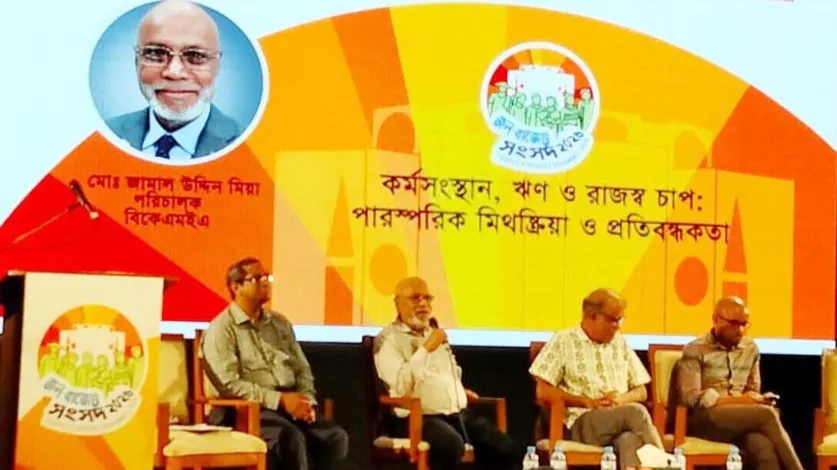
Economists, researchers, labor representatives, and civil society members have called for a more participatory and people-centric national budget to tackle mounting pressure from inflation, unemployment, growing debt obligations, and rising VAT burdens. The demand was raised during a day-long dialogue titled “People’s Budget Parliament 2026,” organized by the Democratic Budget Movement (DBM) at the Liberation War Museum auditorium in Agargaon.
Speakers at the event highlighted that low- and middle-income groups are bearing the brunt of the current economic crisis. Soaring food prices, rising fuel and energy costs, increased electricity and gas tariffs, and a shrinking job market are making daily life increasingly difficult for ordinary citizens. Furthermore, experts warned that growing external debt and rising interest repayments are narrowing the government’s fiscal space, leaving less room for essential development spending.
Throughout the sessions, discussions focused heavily on ensuring fairness in the national budget, boosting allocations for social protection, strengthening food security, advancing agricultural development, and creating sustainable employment opportunities. Participants also stressed the urgent need for balanced revenue collection and prudent debt management.
A central theme of the dialogue was the call for a more democratic budget-making process. Speakers observed that Bangladesh’s existing budget structure remains heavily centralized and argued that development initiatives would be far more effective if fiscal authority and allocation powers were devolved to district and local levels. To achieve this, they emphasized the importance of district-level budgeting, strengthening local government institutions, institutionalizing open budget meetings, conducting social audits, and expanding public participation.
The event featured insights from prominent academicians and experts, including Dr. Kazi Maruful Islam of Dhaka University, Prof. Dr. Sharmind Neelormi of Jahangirnagar University, Prof. Salma Akhtar of Dhaka University, agricultural economist Dr. Jahangir Alam, and Rajekuzzaman Ratan, president of the Socialist Labour Front. Other notable speakers included Dr. Golam Moazzem, research director at the Centre for Policy Dialogue (CPD), Md. Jamal Uddim Miah, Director of BKMEA, Nuzhat Jabin, country director of Christian Aid Bangladesh, and Nazmul Ahsan Miraz from ActionAid Bangladesh. Lidy Nacpil, coordinator of the Asian Peoples’ Movement on Debt and Development, also joined the discussions virtually.
At the conclusion of the dialogue, participants adopted the “People’s Budget Declaration 2026.” The declaration formally calls for an inclusive, accountable, and employment-oriented budget framework that strengthens the fiscal capacity of local governments and guarantees wider citizen engagement in the national budget formulation process.