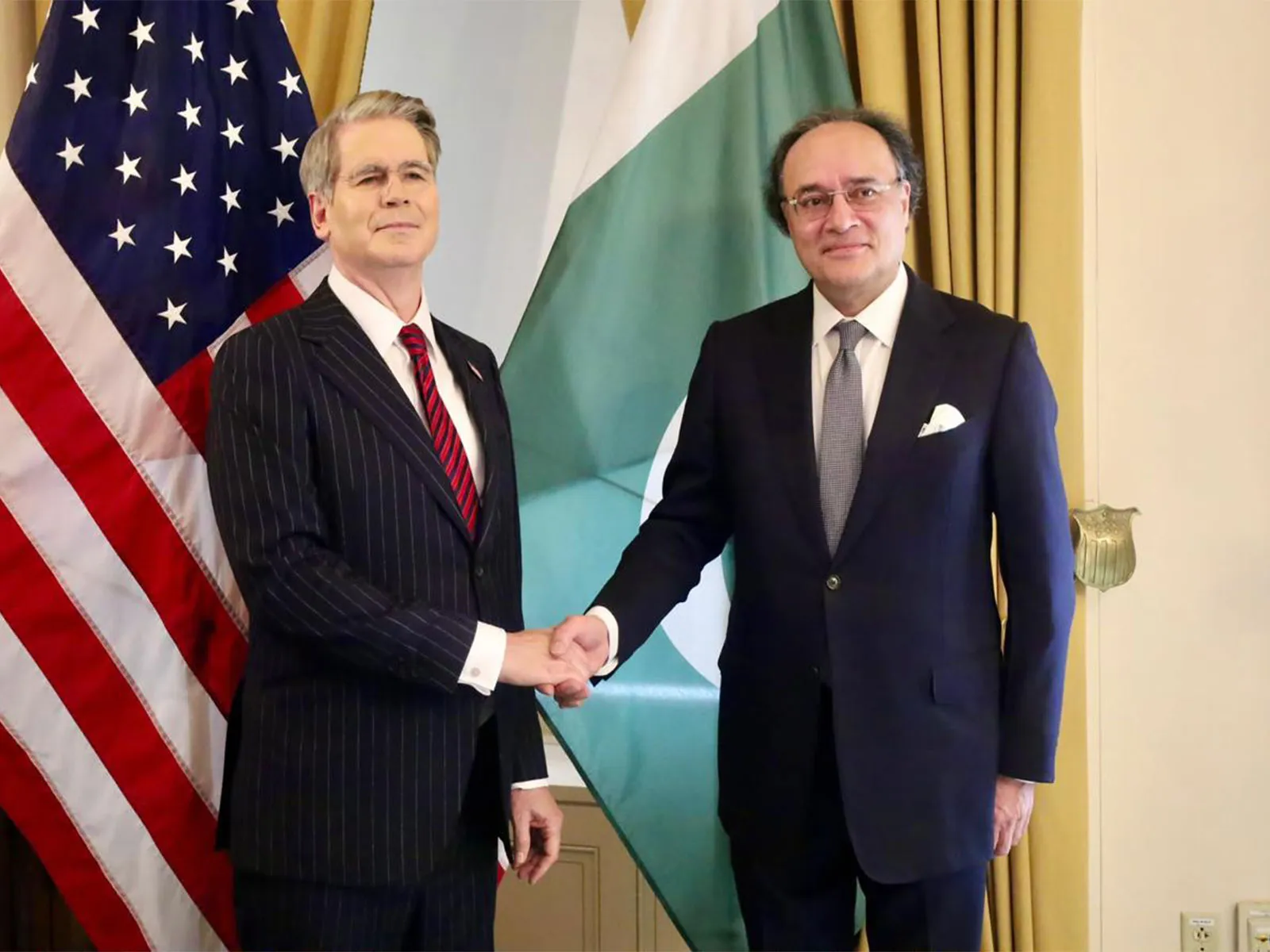
Pakistan has requested a $10 billion exchange stabilisation facility from the United States to help strengthen its foreign exchange reserves and ease pressure on the Pakistani rupee, according to a source familiar with the matter cited by Reuters.
The proposal, submitted to US Treasury Secretary Scott Bessent, seeks a bilateral exchange stabilisation support facility with a maturity of up to five years.
If approved, the facility would boost Pakistan's foreign exchange reserves, reduce pressure on the rupee and lessen the country's dependence on multilateral financing while it continues implementing reforms under its International Monetary Fund (IMF) programme.
The US Treasury declined to comment on the reported request, while Pakistan's finance ministry did not immediately respond to Reuters' request for comment.
Pakistan's Finance Minister Muhammad Aurangzeb met Bessent in Washington on Tuesday. According to a finance ministry statement, Aurangzeb highlighted the country's economic vulnerability to regional geopolitical developments and sought greater US support to improve access to international capital markets, strengthen foreign exchange reserves and enhance Pakistan's sovereign credit profile. The statement, however, did not mention the reported $10 billion request.
Pakistan is currently implementing reforms under a $7 billion IMF programme. The country narrowly avoided default in 2023 after securing a $3 billion IMF standby arrangement, followed by a $7 billion Extended Fund Facility and a separate $1.3 billion climate resilience loan.
Analysts say a US-backed exchange stabilisation facility would provide both financial support and a strong signal of confidence in Pakistan's economy while reducing its reliance on emergency external financing.