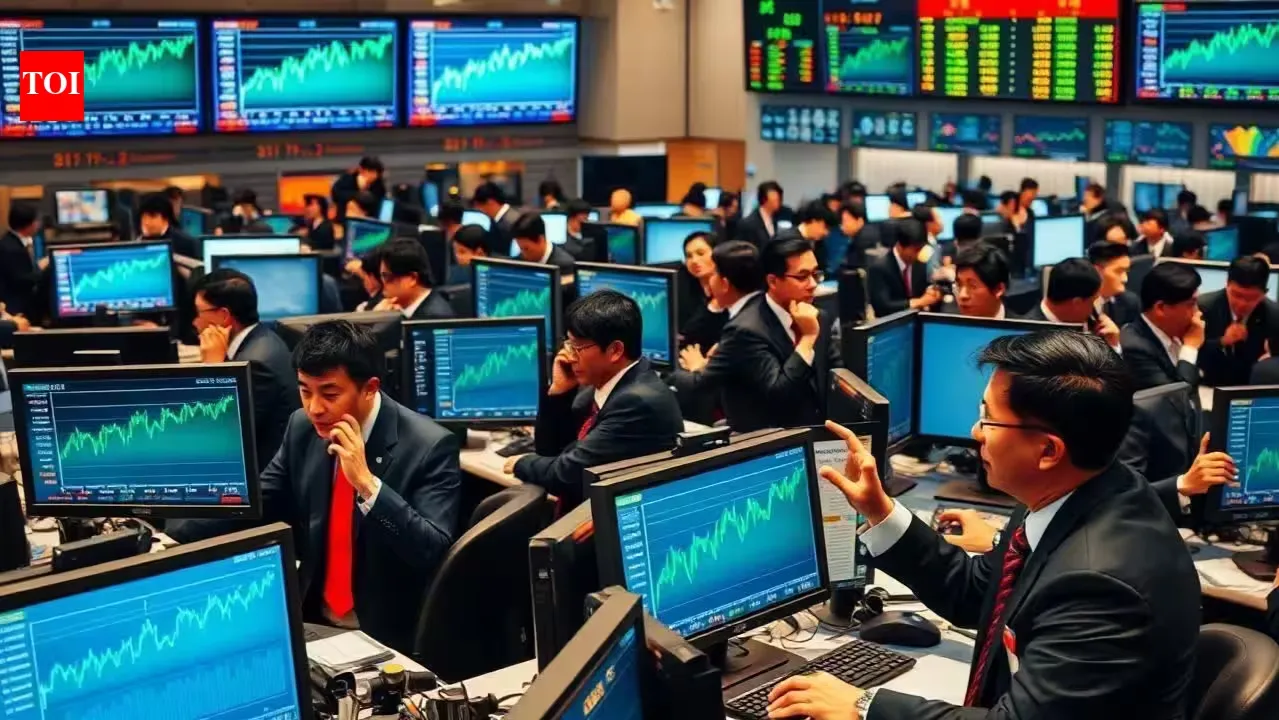
Asian equity markets posted modest gains on Friday as regional investors weighed the US Treasury's aggressive intervention to curb surging sovereign bond yields against broader global headwinds, including stubborn inflation and unresolved Middle Eastern tensions.
The modest rally across Asia contrasted with cautious sentiment on Wall Street. Despite US Treasury Secretary Scott Bessent's assurances that authorities possess an expansive toolkit to tame borrowing costs, American markets faced fresh selling pressure over sticky consumer prices, heavy sovereign debt issuance, and the protracted deadlock in the Strait of Hormuz, which has steadily driven crude prices upward over the past fortnight.
The US Treasury moved to calm bond markets earlier in the week by pledging to "at least double" its sovereign bond buyback program after the benchmark 30-year yield spiked to levels unseen since 2007. While the announcement triggered an immediate pullback in yields, long-term borrowing costs rebounded swiftly on Thursday. Market analysts noted that liquidity injections offer short-term relief rather than a definitive cure for rising capital costs. Defending the move, Bessent maintained that current yields deviate from macroeconomic fundamentals, asserting that price pressures will subside once regional geopolitical conflicts de-escalate and energy supply stabilizes.
While rising capital costs dragged down debt-reliant US tech heavyweights, Asian equities drew momentum from a surge in semiconductor and hardware counters. South Korean benchmarks advanced firmly, propelled by Samsung Electronics—amid reports of a potential $79 billion shareholder return program—and SK hynix, which surged over 12 percent following its announcement of a $29 billion stock buyback. Regional bourses in Hong Kong, Singapore, Taipei, and Wellington closed higher, offsetting slight pullbacks in Tokyo, Sydney, and Shanghai.
Financial analysts highlighted that sovereign debt markets face mounting pressure not only from government borrowing across North America and Europe, but also from a supply wave of corporate bond issuance by mega-cap technology corporations funding massive artificial intelligence infrastructure.
In foreign exchange trading, the Japanese yen appreciated against the US dollar as domestic inflation accelerated on the back of imported energy costs, reinforcing expectations that the Bank of Japan could pursue further interest rate hikes next month. Global investors now turn their focus to the upcoming Jackson Hole economic symposium, seeking monetary policy clarity from Federal Reserve Chair Kevin Warsh amid heightened volatility across global debt and equity desks.
Key Market Indicators (around 0200 GMT):
Tokyo – Nikkei 225: Down 0.7 percent at 65,746.88
Hong Kong – Hang Seng Index: Up 0.7 percent at 25,882.03
Shanghai Composite: Down 0.1 percent at 3,891.45
US Dollar / Japanese Yen: Trading at 158.97 yen (down from 159.11 yen)
Euro / US Dollar: Up at $1.1690 (from $1.1680)
Pound Sterling / US Dollar: Up at $1.3644 (from $1.3630)
Brent North Sea Crude: Up 0.1 percent at $93.89 per barrel
West Texas Intermediate (WTI): Steady at $87.83 per barrel