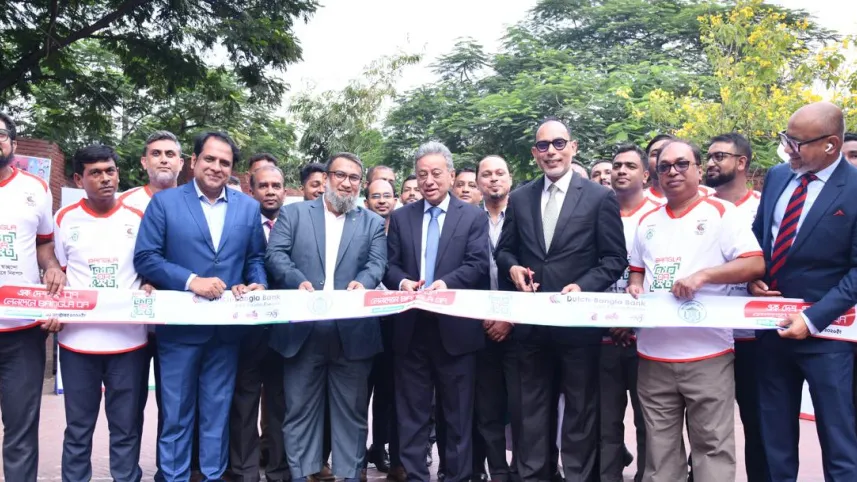
Accelerating the national transition toward a cashless economy, the Ministry of Finance has unveiled an ambitious regulatory initiative to integrate every micro-merchant, street vendor, and small retailer into the interoperable Bangla QR payment framework. Addressing commercial delegates and fintech executives at a retail digital finance launching ceremony in Banani, Dhaka, Finance Minister Amir Khosru Mahmud Chowdhury stated that universal digital onboarding represents the cornerstone of inclusive financial modernization. Under the government's revised national payment roadmap, transactions executed through the standardized Bangla QR protocol will remain entirely free of merchant discount rates and processing fees. The initiative enables tea stall owners, roadside grocers, and transport workers to receive digital payments directly into their accounts across scheduled banks and mobile financial service providers. Regulators affirmed that institutionalizing zero-cost digital settlements will dismantle traditional barriers that historically excluded informal economic operators from the formal banking ecosystem.
The Bangla QR infrastructure, formulated under the technical oversight of Bangladesh Bank, operates on open-loop interoperability standards certified by international payment networks including VISA, Mastercard, and UnionPay. In contrast to fragmented, proprietary QR systems previously operated by isolated mobile wallet companies, a single Bangla QR plate accommodates transactions initiated from any domestic banking application or MFS wallet. Financial industry data reveals that while upper-tier urban shopping malls have rapidly embraced digital card readers, Bangladesh's vast informal trade sector—encompassing over 12 million micro-enterprises—remained overwhelmingly reliant on physical cash. Small traders historically avoided point-of-sale machines due to expensive rental charges, installation fees, and a two to three percent merchant discount fee levied on transactions. By permanently waiving merchant transaction charges for small businesses, the new policy eliminates the primary financial disincentive deterring digital adoption among low-income entrepreneurs.
To operationalize universal deployment across peripheral districts, the central bank and the Ministry of Commerce are mobilizing joint field execution teams in collaboration with leading MFS operators such as bKash, Nagad, and Rocket. Commercial banks have been instructed to simplify institutional Know-Your-Customer protocols, allowing roadside traders to register digital merchant accounts using basic national identification cards and ward councillor trade certificates. Telecommunication network providers are collaborating with payment aggregators to deploy robust offline cryptographic verification protocols to guarantee transaction reliability in semi-urban areas with intermittent cellular data connectivity. The central bank confirmed that daily merchant settlement balances will be transferred automatically into vendors' interest-bearing micro-savings accounts overnight. Furthermore, digitized transaction histories generated through Bangla QR will establish formal credit profiles, enabling micro-merchants to access collateral-free institutional business loans from commercial lenders.
Small business owners, consumer advocacy groups, and digital economy specialists have enthusiastically embraced the ministry's announcement while emphasizing the necessity of sustained digital literacy initiatives. Along the busy commercial corridors of Karwan Bazar, Mirpur, and Old Dhaka, dozens of vegetable vendors and small fruit stall operators who piloted Bangla QR stickers reported significant convenience and reduced risks of counterfeit currency. Micro-merchants noted that receiving exact digital payments eliminates the persistent daily shortage of physical coin change and prevents petty cash thefts. However, retail vendor associations urged municipal corporations and commercial banks to organize hands-on training workshops to educate non-literate merchants regarding voice-alert transaction confirmation boxes. Economists underscored that formalizing informal retail cash flows into the digitized banking stream will significantly broaden the national tax base and curtail the velocity of unrecorded parallel economy liquidity.
The finance minister reaffirmed that the government is fully prepared to resolve any transitional software bugs or technical glitches as millions of grassroots merchants join the unified network. Finance Minister Amir Khosru Mahmud Chowdhury stated, "Cashless financial transactions have proven exceptionally safe, transparent, and successful across emerging economies worldwide, and our government is determined to ensure that every citizen and roadside vendor adopts Bangla QR without fear or hesitation." The Ministry of Finance announced that a month-long national digital payment festival will be inaugurated next month across all divisional headquarters to distribute free QR plates to small traders. The central bank plans to introduce localized voice-notification soundboxes in regional dialects to provide immediate audio confirmation of successful payments for rural vendors. Policy planners concluded that universalizing digital micro-payments represents an irreversible milestone in Bangladesh's journey toward an egalitarian, technologically empowered society.