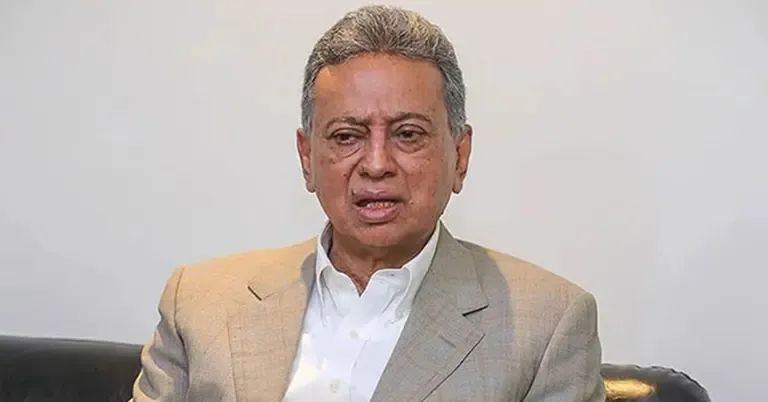
Finance Minister Amir Khosru Mahmud Chowdhury stated on Saturday that the national economy is navigating critical headwinds, identifying persistent inflationary pressures on public purchasing power, a critically low tax-to-GDP ratio, the imperative to restore trust in the banking sector, and the urgent need to accelerate private investment and job creation as paramount challenges.
The Finance Minister made these observations as the chief guest at the grand finale of "Econothon 2026," a national inter-university economics competition held at the United International University (UIU) campus in Dhaka on Saturday afternoon.
"Our economy stands at an important crossroads," Chowdhury remarked. "Inflation has severely squeezed the purchasing capacity of ordinary citizens. Simultaneously, tax collection relative to GDP remains disproportionately low. Restoring credibility to the banking ecosystem and expanding employment through investment are urgent imperatives."
Outlining macroeconomic priorities, the minister affirmed that the government's top agenda includes restoring macroeconomic stability and price equilibrium. He pledged to make the tax administration fair, simplified, and tech-driven, enforce corporate governance across commercial banks, foster an enabling climate for private capital, and optimize public spending across education, healthcare, and social safety nets. "Everything will not be resolved overnight, but we will remain steadfast in this pursuit," he asserted.
Highlighting volatile global conditions, Chowdhury pointed to decelerating world trade growth, rising international cost of capital, surging protectionist tariffs, and geopolitical conflicts destabilizing transport and fuel markets, compounded by escalating climate damages. As an import-dependent yet export-oriented economy, Bangladesh feels these external shocks acutely through exchange rate volatility, domestic commodity spikes, and fluctuating export orders.
"Every day at the Ministry of Finance presents a surprise element," Chowdhury noted. "Budgets are drafted on specific baseline assumptions—only to face shocks from energy prices, foreign exchange squeezes, domestic floods, or global market uncertainties."
Addressing Bangladesh’s impending graduation from the Least Developed Country (LDC) category, the minister stressed that exporters must build robust competitive capability rather than relying indefinitely on preferential trade benefits. Speaking to the participating economics students, he highlighted that policymaking inherently demands decisive problem-solving, structured analytical thinking, and accountability under pressure amid incomplete information.